Introduction
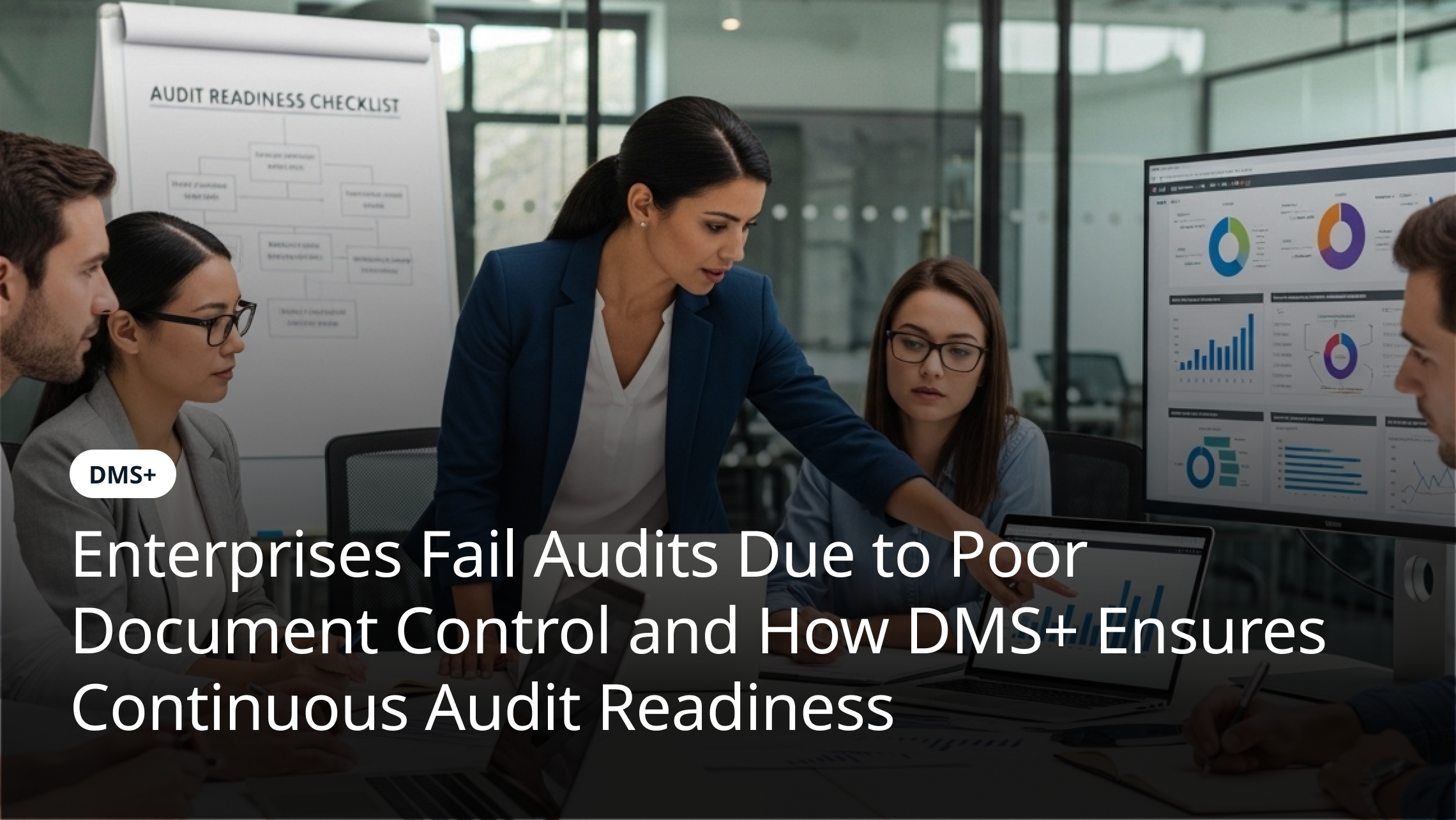
In today’s hyper-regulated business environment, audit readiness isn’t a once-a-year checklist rather it’s a year-round operational imperative. Yet time and again, organizations of all sizes find themselves scrambling when audit requests arrive because they lack one critical capability: effective document control.
From regulatory compliance audits to internal reviews and external certifications, missing, outdated or inaccessible documents are often the root cause of audit failures and embarrassing findings. But poor document control doesn’t just slow down audits, it increases operational risk, drains productivity and can expose organizations to penalties, legal liabilities and reputational damage.
In this blog, we explore why enterprises falter in audits due to inadequate document control and how a modern, secure and AI-driven document management platform like DMS+ enables continuous audit readiness instead of last-minute firefighting.
Why Document Control Matters And Why It Often Fails
Documentation Is the Foundation of Compliance
In most audit frameworks whether financial, operational, or regulatory; the auditor’s first question is always:
“Can you show the evidence?”
Documents verify:
- Access and control policies
If auditors can’t find the right document or the document lacks clear versioning and accountability, organizations don’t just receive findings, they raise red flags.
Common Document Control Failures
Poor document control isn’t always about missing files. Often it’s about:
- Scattered storage: Files on local drives, shared folders, email attachments, or legacy systems
- No version control: Unclear whether the document is the final approved version
- Unidentified ownership: No one knows who’s responsible for the latest updates
- No accountability trail: No record of who accessed or modified the document
- Inconsistent naming conventions: Makes search and retrieval difficult
These failures are systemic and not accidental also they compound over time, leading to audits dominated by panic searches and incomplete evidence.
The Real Cost of Poor Audit Readiness
Failing audits doesn’t just create more work but it hurts business outcomes in measurable ways:
- Increased Operational Costs: Audit preparation becomes manual, repetitive and time-consuming. Teams spend weeks searching for files instead of driving business value.
- Compliance Penalties and Legal Risk: Regulatory authorities may impose fines or require corrective action plans, diverting resources from innovation to remediation.
- Reputation and Stakeholder Trust: Clients, partners and investors may see poor audit control as a risk indicator, affecting confidence and deal opportunities.
- Business Disruption: Critical projects may stall when necessary documentation isn’t accessible, or when version histories are unclear.
Continuous Audit Readiness
Continuous audit readiness is not a one-off project rather it’s an ongoing state enabled by good document governance. It means:
- Documents are stored in a central, controlled system
- Access and change history are automatically logged
- Version control tracks every update
- Compliance standards are embedded into document lifecycle policies
- Regulators and auditors can be given controlled access if needed
This is the difference between receiving an audit with confidence and scrambling for documents under pressure.
Why Traditional Document Storage Fails to Deliver Audit Readiness
Many organizations still rely on outdated storage practices:
- Departmental file servers
- File cabinets and paper records
These “solutions” lack:
Without these foundational features, audit readiness becomes impossible.
How DMS+ Ensures Continuous Audit Readiness
Modern document management platforms go beyond storage. They provide structured governance, intelligent indexing and audit support that make organizations truly ready for any inspection — at any time.
Here’s how DMS+ enables continuous audit readiness:
1. Centralized Document Repository
DMS+ replaces fragmented storage with a single, secure source of truth for all enterprise documents be it finance, HR, legal, contracts, policies, audit reports and more.
No more scattered files. No more blind spots.
2. Intelligent Indexing & Search
With metadata tagging and full-text indexing, DMS+ allows auditors and teams to find what they need in seconds; even across millions of documents.
This turns audits from a search exercise into a retrieval exercise.
3. Role-Based Access Control
Access to sensitive documents is controlled by user roles, authority levels and least-privilege principles. This supports both internal governance and compliance requirements such as PDPA, GDPR and industry-specific standards.
4. Version History and Document Lineage
Every document in DMS+ preserves a full version history. Auditors can see:
- When a document was created
- Which version is approved
This eliminates disputes over “correct” or “final” versions which is a common audit pain point.
5. Automated Audit Trails
External audits and internal reviews require visibility into document use over time. DMS+ tracks:
This transparency is crucial for regulatory, financial and operational audits.
6. Retention & Compliance Policies
DMS+ supports automated retention scheduling, archiving and purge rules aligned with legal requirements and corporate policies. This ensures documents exist exactly as long as they should and no longer.
7. Controlled External Access
Sometimes auditors need direct access to documentation. DMS+ allows temporary, controlled, read-only access without putting the entire system at risk.
No more risky file exports or unsecured sharing links.
Real-World Example
Consider a mid-size enterprise undergoing an annual compliance audit. In the past, audit preparation required:
- Days of coordination between teams
- Manual compilation of evidence documents
- Version reconciliation across departments
After implementing DMS+:
- All required documents were found in a centralized repository
- Version history eliminated questions about validity
- Audit logs demonstrated compliance lineage
- Final reports were ready in hours — not weeks
The outcome was not just a “clean audit” but it showed confidence, clarity and predictability.
Audit Readiness Is a Competitive Advantage
Organizations that build continuous audit readiness don’t just avoid penalties rather they gain competitive advantage.
They are able to:
- Respond faster to regulatory requests
- Demonstrate governance to partners and investors
- Scale operations without documentation bottlenecks
- Automate compliance reporting
- Reduce operational overhead
Continuous audit readiness is not a cost, it’s an investment in resilience and trust.
Conclusion
Poor document control is one of the most common reasons enterprises fail audits — yet it is also one of the most preventable. By ignoring structured document governance, organizations invite chaos, risk and inefficiency.
With a modern document management solution like DMS+, continuous audit readiness becomes part of day-to-day operations rather than an annual panic.
In a world of increasing regulation and accountability, being audit-ready isn’t optional — it’s essential.